Budget 2026: What’s Cheaper? What’s Costlier?
Here is a summary of what items are likely to get cheaper and what might become costlier after the implementation of the Indian Union Budget 2026.
By: Tupaki Desk | 2 Feb 2026 12:13 PM IST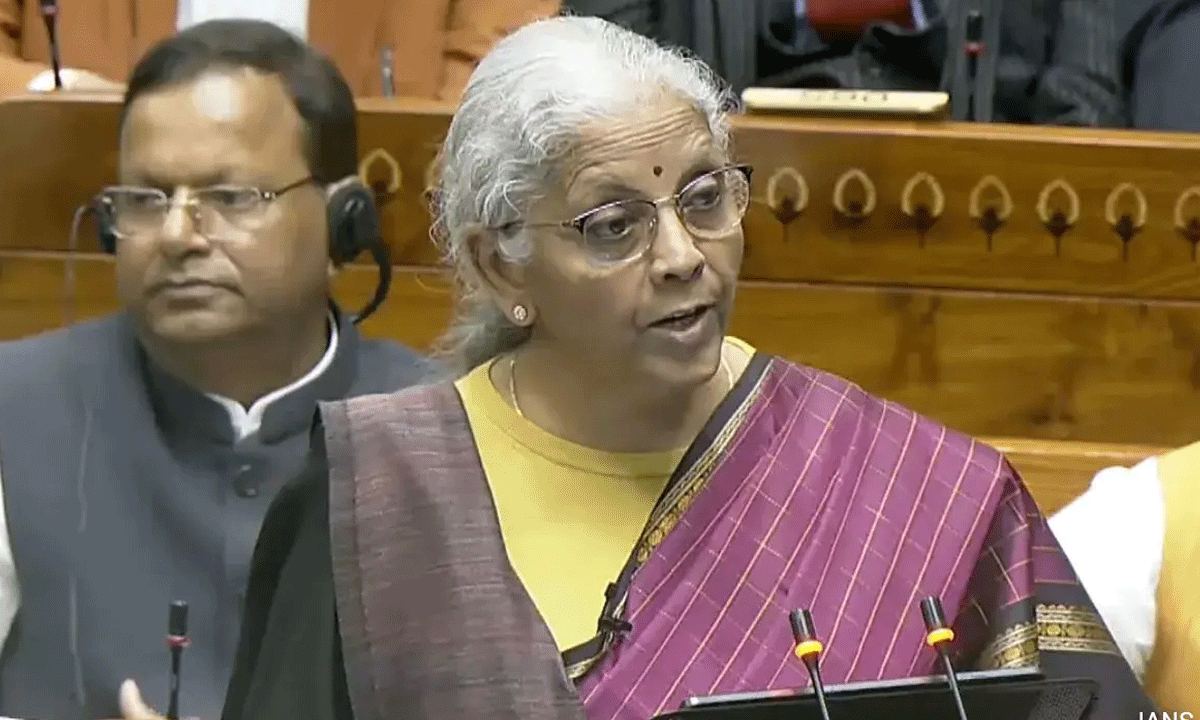
The union budget 2026 was officially announced by the central government in the Parliament yesterday and let us have a look at the kind of implications that this would have on the global markets. Also, let us have a look at the items that would be getting cheaper due to the new budget sanctions and what could be getting costly.
Here is a summary of what items are likely to get cheaper and what might become costlier after the implementation of the Indian Union Budget 2026.
Cheaper items generally come from cuts in customs duty and tax rationalisation that reduce costs for consumers and industries. Prices of many essential medicines, including drugs used for cancer and rare diseases, are expected to fall due to exemption from basic customs duty.
Electronics like mobile phones and tablets assembled in India and components such as microwave ovens are likely to cost less. Electric vehicle batteries and solar panels should see price reductions as duties on key inputs are eased.
Raw materials for leather footwear and textiles and inputs for seafood processing are set to be cheaper, supporting exporters and potentially lowering retail prices. Lower tax collected at source on overseas tour packages, foreign education and medical travel abroad is expected to make these services more affordable. Duty cuts on personal-use imports also reduce costs for certain imported goods.
Costlier items include many luxury and non-essential goods. Imported luxury watches and high-end cameras are set to attract higher tariffs. Alcohol, tobacco products such as cigarettes, beedis, pan masala and gutka will become more expensive due to higher levies.
The removal of duty exemptions on coffee roasting, brewing and vending machines is likely to push up prices for café equipment. Some fertilisers and industrial inputs may also cost more following changes in duty structure. Futures and options trading costs have risen due to higher securities transaction tax, making market trading more expensive for participants.